Plant and engineering
Define the desired outcome, constraints, and available process data.
REACTION / MIXING / THERMAL CONTROL / PRESSURE
The reaction, product behavior, and heat transfer guide the choice. When the process operates under pressure or vacuum, defining the requirements is even more critical. The starting point is not a model; it is what the process needs to achieve, in any industry.
Copyable summary + LinkedIn, no direct submission. AI guidance is preliminary and requires your confirmation; do not include confidential information.
PROCESS STUDY / Industrial stirred reactors
Product
Operation
Integration
CONCEPTUAL DIAGRAM · DOES NOT REPRESENT REAL EQUIPMENT, SCALE, OR A SPECIFICATION.
Starting point
Turn a reaction or mixing need into requirements that engineering and the manufacturer can review.
These are indicative contexts, not completed projects or performance claims for supplied equipment.
When to consider the solution
Compare alternatives based on the product, constraints, and acceptance criterion; the equipment name does not determine its suitability.
Information needed
Do not attach files or confidential information to the AI. Documentation is shared through an agreed channel, not automatically.
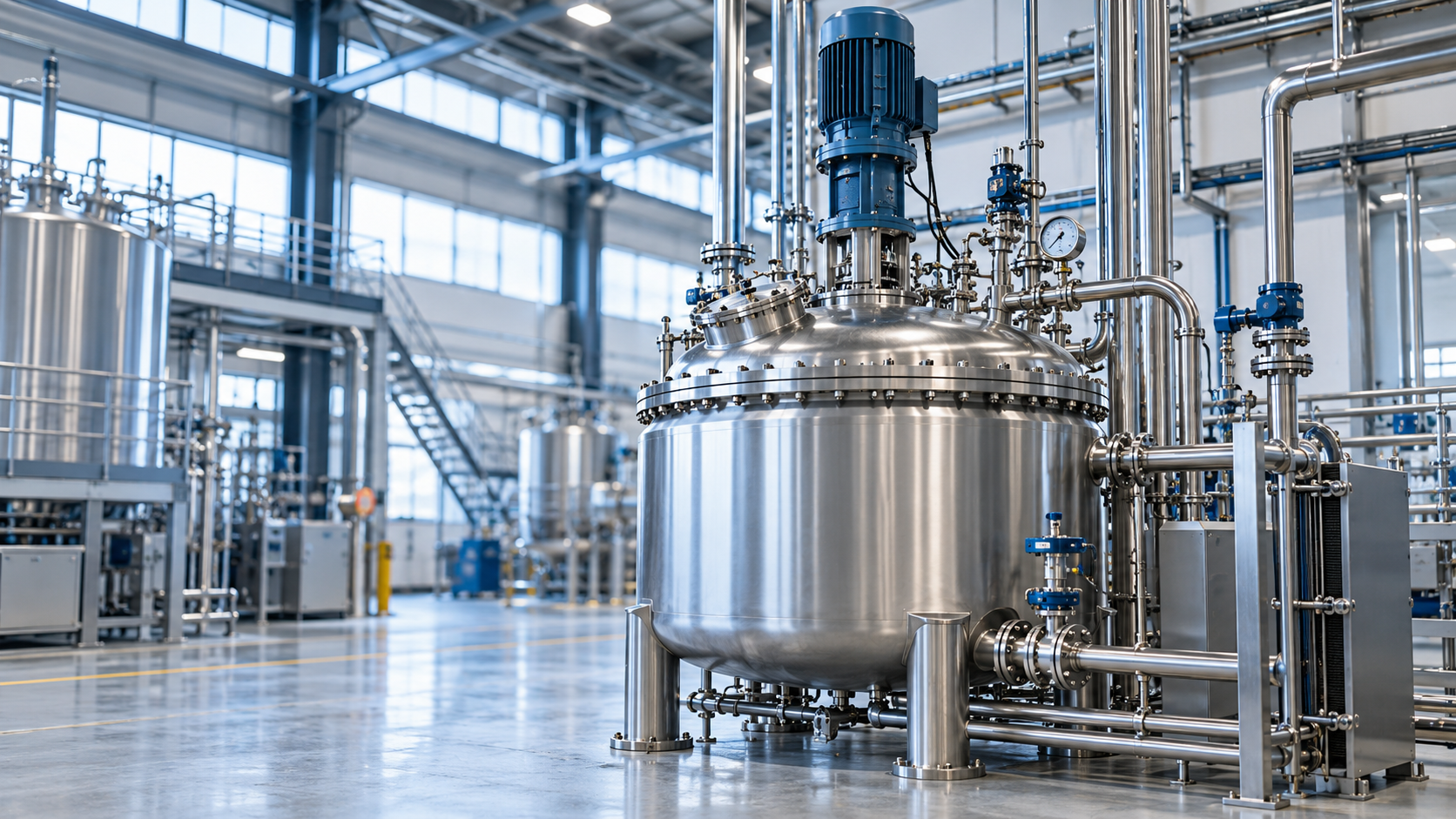
Visual context
The visual reference helps identify the equipment type, but the solution is defined by your product, conditions, and plant. Images are shown only as references, are not presented as our projects, and none replaces a technical assessment.
Evaluation basis
Share what you know and mark the rest as outstanding. Values, calculations, and applicable requirements must be verified by competent engineering professionals.
A shared decision
Define the desired outcome, constraints, and available process data.
Compare proposals against a common scope, identifying inclusions, exclusions, and outstanding information.
Review feasibility, detailed design, documentation, and supply conditions once the scope has been defined.
We help you organize the need, identify outstanding information, and prepare a technical discussion with a clear scope. VPENGINEERING does not present itself as a manufacturer: detailed design, manufacturing, and supply conditions require assessment and agreement by the relevant responsible parties.
See how we workCompare proposals
These questions do not constitute design or approval. Testing, certification, maintenance, and commissioning must be confirmed by the competent responsible parties; their availability is not assumed.
Scope and methodologyTechnical questions
No. Many reactors operate close to atmospheric pressure. When a process requires pressure or vacuum, the equipment must also be assessed as a pressure vessel, with design conditions and the applicable framework defined by competent engineering professionals.
Yes. Describe the operation and what you need to achieve. Unknown data are identified as outstanding; they are not replaced with assumed values.
Not necessarily. The reaction, heat transfer, product behavior, and risks may change the requirements. The equipment name is no substitute for process analysis.
Competent engineering professionals and the manufacturer must verify compatibility, design conditions, and applicable requirements. This page and the AI are not a specification.
Your next step
The family will be selected in your inquiry. Fill in any information you want to prepare, copy the summary, and share it on LinkedIn. Nothing is sent automatically.
Prepare my technical summary