Skip to content
VPENGINEERING
Prepare an inquiry

Technical and commercial guidance

Pressure reactors and process equipment.
Technical judgment to choose the right solution.

We help you define requirements, assess alternatives, and connect your needs with the right technical solution in any process industry.

No complete specification required. Copyable summary + LinkedIn.

AGITATIONTHERMAL CONTROLPROCESSINTEGRATIONREQUIREMENTS TO BE DEFINED

CONCEPTUAL VISUALIZATION · NOT REAL EQUIPMENT

PRELIMINARY AI-GUIDED ORIENTATIONDescribe your needs · No confidential data

01 · What you can ask about

Pressure and stirred reactors, pressure vessels, columns, heat exchangers, filtration, drying and mixing equipment, and skids. For any industry.

02 · What you can prepare

Product, objective, approximate capacity, known conditions, and available documentation.

03 · How the inquiry starts

Prepare a summary of your needs and share it on LinkedIn to start the conversation.

Equipment selector

Which process equipment are you considering?

Choose an equipment type to see which questions to address and what information to provide to get started.

7 equipment families available · Conceptual illustrations

PRIMARY FAMILYEQ.01

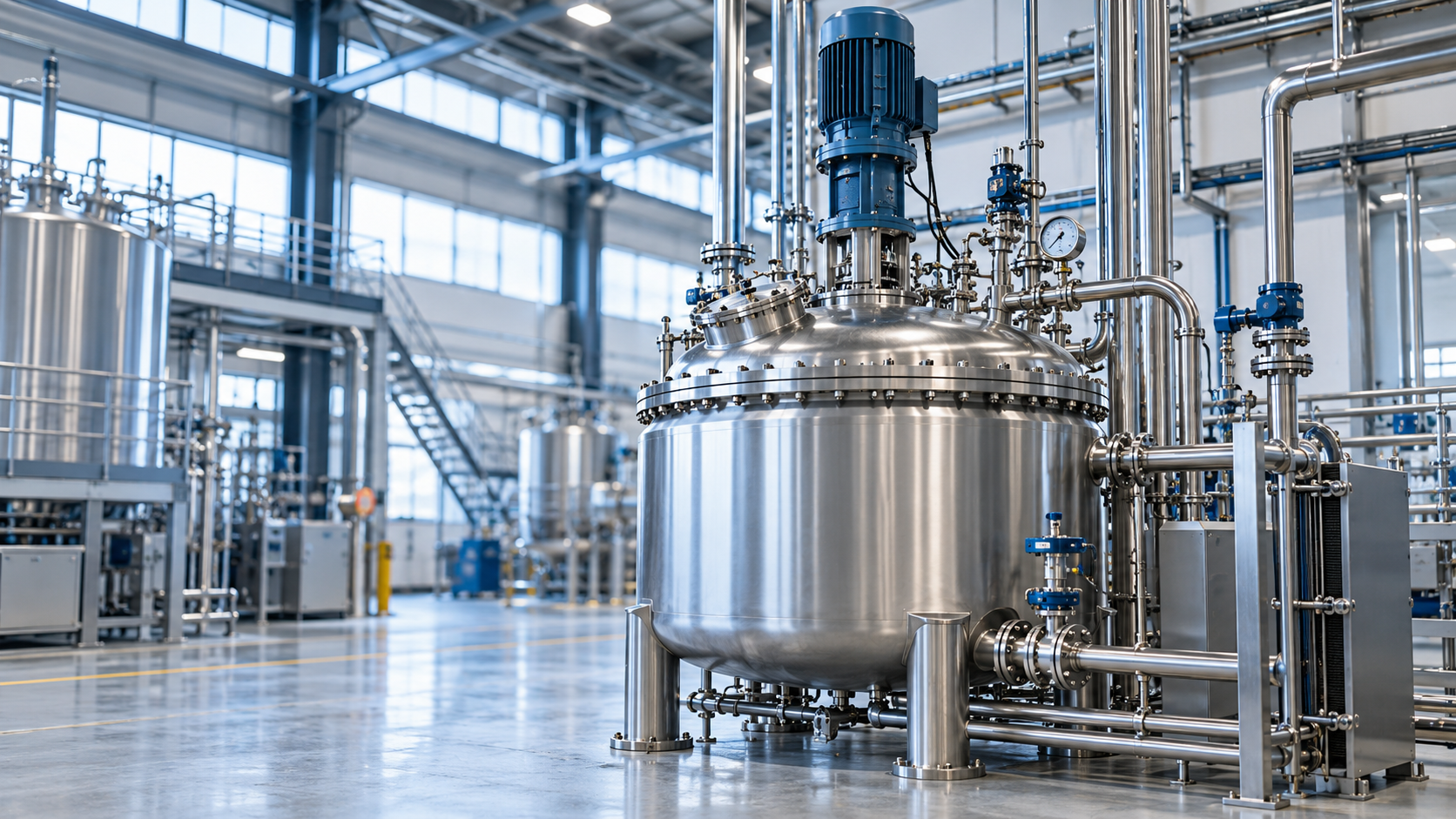
Stirred reactor

Reaction, transformation, mixing, or dispersion processes in which thermal control and agitation affect the outcome, including reactors operating under pressure or vacuum when required by the process.

Key questions
  • What reaction or transformation takes place, and in what mode (batch or continuous)?
  • Does the process operate under pressure or vacuum, and what level of agitation and temperature control does the product require?
  • How does it integrate with charging, discharge, cleaning, and plant utilities?
View technical guide
PROCESS EQUIPMENTEQ.02

Pressure vessel

Storage, separation, or containment of fluids under conditions requiring specific design and verification.

Key questions
  • What fluid does it contain, and under what service conditions?
  • Which regulations or design code apply at your facility?
  • Is this a new installation or replacement of existing equipment?
View technical guide
PROCESS EQUIPMENTEQ.03

Columns and static equipment

Separation, distillation, absorption, or washing operations in which efficiency depends on the internal design.

Key questions
  • What separation is required, and what is the target purity?
  • What flow rates and compositions does the process handle?
  • Are there height, space, or integration constraints?
View technical guide
PROCESS EQUIPMENTEQ.04

Heat exchanger

Heat, cool, condense, or recover energy between process fluids or utilities.

Key questions
  • Which fluids are involved, and what temperature change is required?
  • Are there risks of fouling or corrosion, or any sanitary requirements?
  • What space and ease of maintenance are required?
View technical guide
PROCESS EQUIPMENTEQ.05

Filter

Separate solids from liquids or gases, recover product, or protect downstream process stages.

Key questions
  • What needs to be retained or recovered?
  • What is the solid like: particle size, quantity, and behavior?
  • Will operation be manual, automatic, or contained?
View technical guide
PROCESS EQUIPMENTEQ.06

Dryer / mixer

Drying, mixing, or homogenization of solids, pastes, or powders according to the process outcome required.

Key questions
  • What product is being processed, and what is its condition at the inlet and outlet?
  • What homogeneity or final moisture content is required?
  • Are there thermal-sensitivity, ATEX, or containment requirements?
View technical guide
PROCESS EQUIPMENTEQ.07

Skid or custom solution

Group equipment, instrumentation, and controls into an integrated package to simplify installation and commissioning.

Key questions
  • What complete function must the package perform?
  • What equipment, instruments, and automation does it include?
  • What are the plant’s battery and space limits?
View technical guide

Prepare a summary to copy and share on LinkedIn. The selector does not send or save an inquiry.

Requirements guides

From the reactor to every complementary process stage.

Indicative editorial content. Applications do not certify available models, manufacturing, or certification.

Guided technical brief

Define your needs.
The rest, step by step.

Equipment, application, and project status. You can start with partial information; technical details are still optional.

The guided brief does not transmit your answers. If you choose AI guidance, you review and explicitly confirm the content before sharing it with the provider.

Preliminary AI, with no contact details or confidential information. Up to 12 analyses per UTC day shared among all visitors; the non-AI brief does not use this quota.

  1. 01Equipment
  2. 02Application
  3. 03Project

Step 1 of 3: Equipment

What equipment or solution are you looking for?

Industrial reactors

Reactors designed around your process.

A stirred reactor is not selected from a catalog. We help define the right solution—including reactors operating under pressure or vacuum—by connecting your process needs with engineering, equipment specifications, and the appropriate manufacturer.

R.01

Reaction and transformation

Equipment suited to the reaction type and the actual behavior of your product.

R.02

Mixing and homogenization

Agitation defined by what the process needs to achieve.

R.03

Thermal control

Heating and cooling solutions integrated into the process.

R.04

Product compatibility

Materials and finishes selected based on product requirements.

R.05

Operating conditions

Design adapted to the conditions specified by your process.

R.06

Plant integration

Connection to charging, discharge, utilities, controls, and cleaning.

The 7 questions that define your reactor

Design variables to be defined based on the product and process conditions.

CONCEPTUAL DIAGRAM · VARIABLES TO BE DEFINED

Variable · Agitation

What should the agitation achieve: mixing, dispersion, solids suspension, or enhanced heat transfer?

If you don't have the answer yet, we can work it out together during the initial assessment.

Explore reactors in greater depth

Visual references

Images to provide context for the technical discussion.

Visual and conceptual references for the equipment you can inquire about. No image represents a project, manufacturing work, or VPENGINEERING capability.

AI-generated conceptual visualization of an industrial stirred reactor with top-mounted motor, piping, and instrumentation; not real equipment
AI-generated conceptual visualizationConceptual stirred reactor created with artificial intelligence. It does not represent real equipment, manufacturing work, a project, or certification.
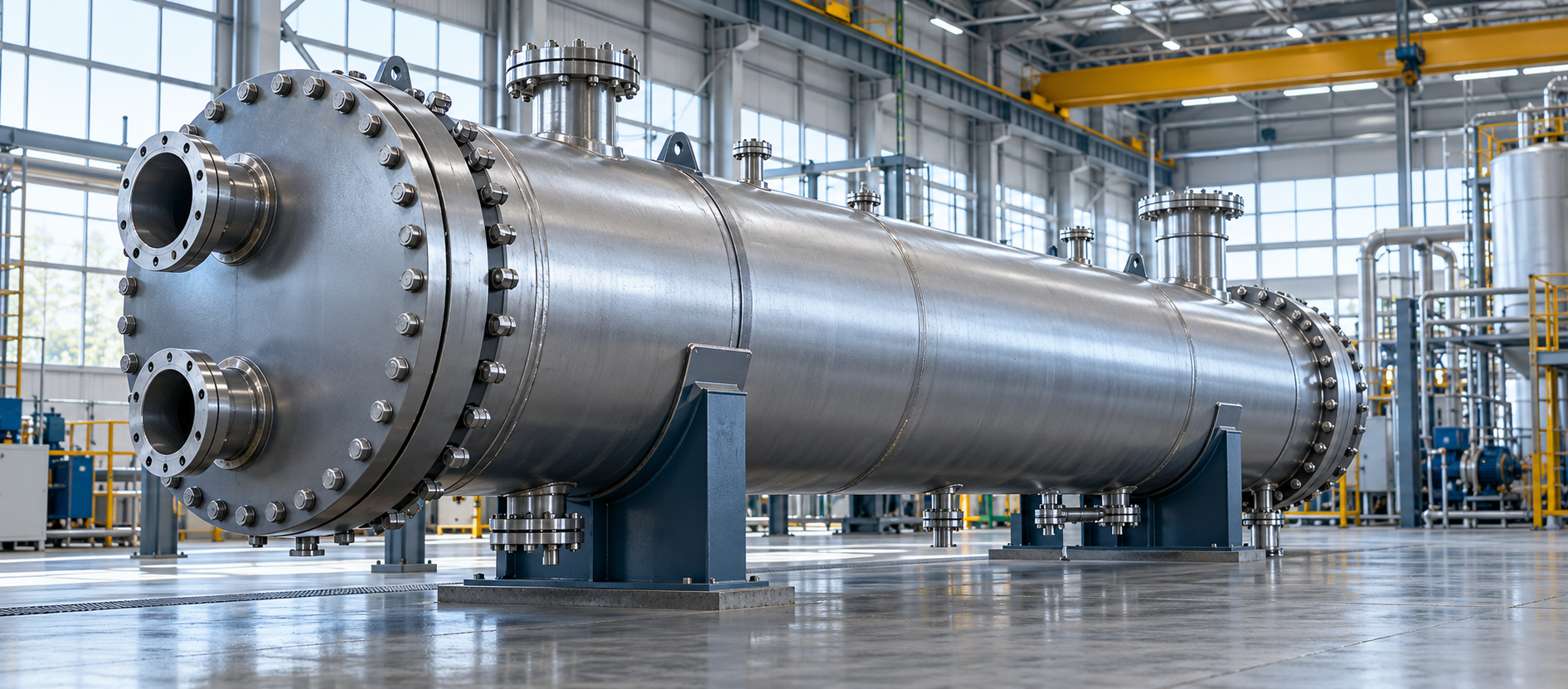
AI-generated conceptual visualization of a horizontal shell-and-tube heat exchanger in a workshop; not real equipment
AI-generated conceptual visualizationConceptual heat exchanger created with artificial intelligence. It does not represent real equipment, manufacturing work, a project, or certification.
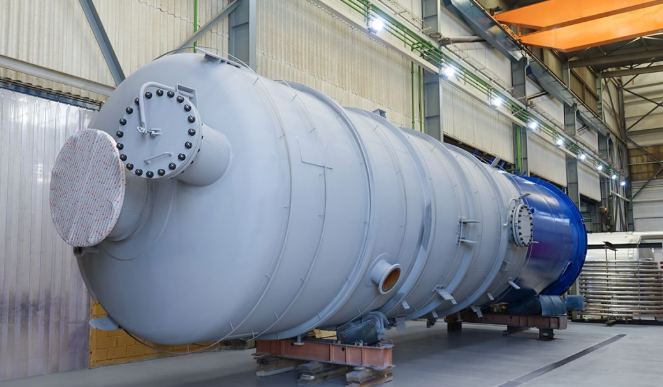
User-provided reference image of horizontal industrial equipment in a manufacturing workshop
Provided reference imageReference photograph provided by the user. It is not a VPENGINEERING project or capability.

Sectors

Pressure reactors and complementary equipment for any industry.

Industries the solution may serve, without being limited to these. Every case starts with the specific requirements of your process.

Chemicals and petrochemicals

Reactions, separations, and equipment operating under demanding process conditions.

Pharmaceuticals and fine chemicals

Processes where traceability, cleanliness, and reproducibility are critical.

Cosmetics

Mixing, emulsification, and homogenization of products with demanding textures.

Food and beverages

Equipment with hygienic and cleaning requirements integrated from the design stage.

Biotechnology

Sensitive processes requiring precise control of operating conditions.

Energy and industrial processes

Heat exchange, storage, and custom process solutions.

Water treatment and environmental services

Dosing, reaction, and separation in treatment processes.

Other process industries

Mining, materials, and any other industry: solutions are defined case by case.

Explore applications and criteria by industry

Start without a specification

Don’t have the full specification yet?

You can start with the product and the objective. Separating what you know from what still needs to be defined already helps structure the inquiry.

  • What product do you process?
  • What do you want to manufacture or improve?
  • Approximate capacity
  • Known conditions
  • Current problem
  • What documentation do you have? Do not attach it.

Process

From the initial need to a viable technical solution.

  1. 01

    Need

    Understand the operation and objective.

    Procurement and plant teams share a starting point: what the equipment needs to solve and why.

  2. 02

    Requirements

    Separate what is known from what is still pending.

    Product, conditions, and integration are organized so engineering can assess the scope.

  3. 03

    Alternatives

    Compare options using process-based criteria.

    Application, constraints, and maintenance guide the assessment of technical options.

  4. 04

    Next step

    Prepare for a useful conversation.

    Define what information to review with engineering or the appropriate supplier to move forward.

The initial contact is for reviewing the objective and outstanding information, not confirming a solution. The manufacturer participates in assessing a specific proposal and its design; responsibilities, documentation, budget, and timelines must be agreed according to scope. No assessment or submission is performed automatically through this website.

Methodology, scope, and existing equipment

Technical library · editorial content

The right questions to ask before specifying.

INTRODUCTORY / REACTORSCompare proposals without confusing operating conditions with design conditions+

How can you make a useful technical-commercial comparison?

Give each party the same basis: product, function, known conditions, interfaces, and acceptance criteria. Separate operating conditions from design conditions; competent engineering professionals define the latter and their scenarios. Compare auxiliaries, documentation, inspections, tests, exclusions, and responsibilities. An offer with a narrower scope is not directly comparable. Prices, lead times, and commitments are confirmed in the specific proposal, not on this website.

  • — Common basis and clearly identified outstanding data
  • — Inclusions, exclusions, and auxiliaries
  • — Parties responsible for review and acceptance
INTRODUCTORY / REACTORSWhat to prepare for existing equipment or a replacement+

What information helps define an after-sales need?

Describe the function, current problem, known reference, and available documentation. Distinguish replacement, repair, and process improvement. Compatibility, availability, manufacturing, maintenance, and commissioning are verified with the competent supplier and subject to available agreements. VPENGINEERING captures and helps structure the need but does not promise to carry out the work. Do not send drawings or confidential documentation to the AI.

  • — Function, condition, and reason for inquiry
  • — Reference and available documentation
  • — Compatibility and scope to be confirmed
INTRODUCTORY / PROCESS EQUIPMENTWhat information do you need to specify a reactor?+

What information do you need to specify an industrial reactor?

Start with the product, its phases, and the process objective. Then define the operating mode, working volume, agitation, heat transfer, and pressure or vacuum conditions. Add material compatibility, cleaning, connections, and available utilities. Unknown data are identified during the assessment; you do not need a complete specification to get started.

  • — Product and desired transformation
  • — Agitation and heat transfer
  • — Conditions, cleaning, and integration
INTRODUCTORY / REACTORSStirred reactor or mixing equipment: what is the difference?+

What is the difference between a stirred reactor and mixing equipment?

Mixing equipment is intended to combine, disperse, or homogenize components. A reactor is designed for a reaction or transformation that may require temperature, pressure, vacuum, or dosing control. Both may include agitation: the distinction is determined by the process objective, not the equipment name. Selection should start with the product and desired outcome.

  • — Mixing or transformation objective
  • — Control of process conditions
  • — Expected outcome and product requirements
INTRODUCTORY / REACTORSChecklist for requesting process equipment+

What should a request for a process-equipment assessment include?

State the equipment function, product or stream, approximate quantity, and known conditions. Describe the installation, space constraints, utilities, cleaning, and regulations to be considered, whatever your industry. Add the project stage and any available documentation. Separate essential requirements from preferences and identify missing data. The solution, budget, and timeline depend on the scope of each case.

  • — Function, product, and known conditions
  • — Constraints and essential requirements
  • — Project stage, documentation, and outstanding data

Frequently asked questions

Before taking the next step.

Can I ask about spare parts, maintenance, or existing equipment?

Yes, to help structure the need. Compatibility, availability, and scope are confirmed with a competent supplier and/or subject to available agreements. The website does not promise manufacturing, maintenance, certification, or commissioning.

Is there a standard offering for all industries?

No. Applications are indicative; process, risks, materials, cleaning, documentation, and the applicable framework must be verified case by case. Showing an industry does not establish experience or compliance in it.

Can I inquire without knowing the pressure, volume, or materials?

Yes. Describe the product, operation, and objective. Leave unknown values blank; identifying them is part of defining the requirements.

Does VPENGINEERING manufacture the equipment?

VPENGINEERING provides technical-commercial support to define and assess the solution and connect the need with engineering and the appropriate supplier. It does not present itself as a manufacturer.

Is my inquiry sent when I complete the form?

No, while lead capture is disabled. A summary is prepared for you to copy and share on LinkedIn. Email and CRM integrations are not active.

What happens in the first conversation?

The operation, objective, and missing information are reviewed. This does not constitute a quotation, an approved specification, or a supply commitment. The next step depends on the agreed scope.

When do engineering and the manufacturer get involved?

Competent engineering professionals verify requirements and safety. The manufacturer reviews a specific proposal, detailed design, and manufacturing or supply conditions. Responsibilities and commercial relationships are clarified case by case; no representation is assumed.

What can I share, and what should I avoid?

Prepare a general description. The AI does not accept contact details or files: avoid personal data, customer information, formulations, drawings, and secrets. The form summary stays local until you choose to copy it or share it on LinkedIn, which has its own policy. Legal information must be completed before lead capture is enabled.

Does AI replace an engineering review?

No. It organizes a need and suggests questions; it can be wrong and does not determine materials, dimensions, safety, or compliance. Consent is required before information is transmitted to a supplier, and the text is not anonymized. There are 12 shared analyses per day (UTC); the manual brief remains available if they are used up.

Original black-and-white portrait of Víctor Pérez-Mas González, CEO of VPENGINEERING, wearing a shirt and looking to his left
Photograph provided by the userOriginal black-and-white photograph.

Víctor Pérez-Mas González — CEO of VPENGINEERING

Industrial engineer · Mechanical engineering specialization

Engineering, projects, and commercial dialogue, connected to the realities of plant operations.

Who is behind it

Mechanical engineering, industrial project management, and technical business development.

Speaking with Víctor means putting the process first: understanding what you need, what shapes the project, and what warrants technical review before choosing equipment.

Client
Engineering
Industrial solution
  • Industrial engineer, specializing in mechanical engineering
  • More than 10 years of professional experience
  • Project director in pharmaceutical, petrochemical, food, and cosmetics sectors
  • Experience in process equipment, client relations, and international business development

This information describes Víctor’s personal career, not projects delivered by VPENGINEERING or manufacturing capabilities. The technical-commercial scope and any third-party involvement are defined in each conversation; no manufacturer representation is implied.

Professional network described by Víctor

Víctor describes direct contacts with Spanish manufacturers of static process equipment, primarily pressure vessels and heat exchangers in stainless steel and special alloys. This network helps guide discussions; it does not establish current contracts, representation, exclusivity or availability.

His professional document describes personal experience in Oil & Gas projects. This is not presented as VPENGINEERING case studies, current clients or contracts.

View LinkedIn profile

Personal experience in Oil & Gas projects

  • Repsol
  • bp
  • Galp
  • TotalEnergies
  • Moeve
Logos supplied by the user as references to Víctor’s personal career. They do not establish VPENGINEERING clients, current contracts, representation or projects.

A useful inquiry starts here

Tell us what your process needs.

Prepare a clear inquiry with the information you have. The form generates a copyable summary; it does not yet send or store requests. You can contact us manually via LinkedIn, telephone or email.

How to prepare your inquiry

  1. 1Specify the equipment, product, and objective
  2. 2Prepare and copy your technical summary
  3. 3Share it with Víctor on LinkedIn
Contact via LinkedIn

Manual commercial contact

Opens your email application with both recipients. You write the message and decide whether to send; the website neither sends nor confirms receipt. Do not include confidential information. Telephone contact is subject to availability; no WhatsApp channel is advertised.

BRIEF / TECHNICAL REQUEST

Your needs, clearly structured.

This form prepares a summary; it does not send data. You can copy it and share it via LinkedIn.

Inquiry context · optional
Non-confidential guidance · optional

For Oil & Gas, state upstream, midstream or downstream under Application / process. For any industry: service scope, equipment, generic fluid, known pressure/temperature ranges, preferred material, location and project horizon. All technical information is optional; distinguish operation from design and do not include sensitive information.